





Skip to content
Advertisement
www.nomascom.kz upper
Tribuna.kz

Politics

Dutch Senate approves two laws on return and detention of foreign nationals

The laws make detention a last resort and end fines against the IND for delayed asylum decisions.

The Dutch Senate approved two laws covering the return and detention of foreign nationals. They change detention rules, allow some people to be designated undesirable and abolish fines against the IND for late asylum decisions.

Source: First Chamber of the States General of the Netherlands

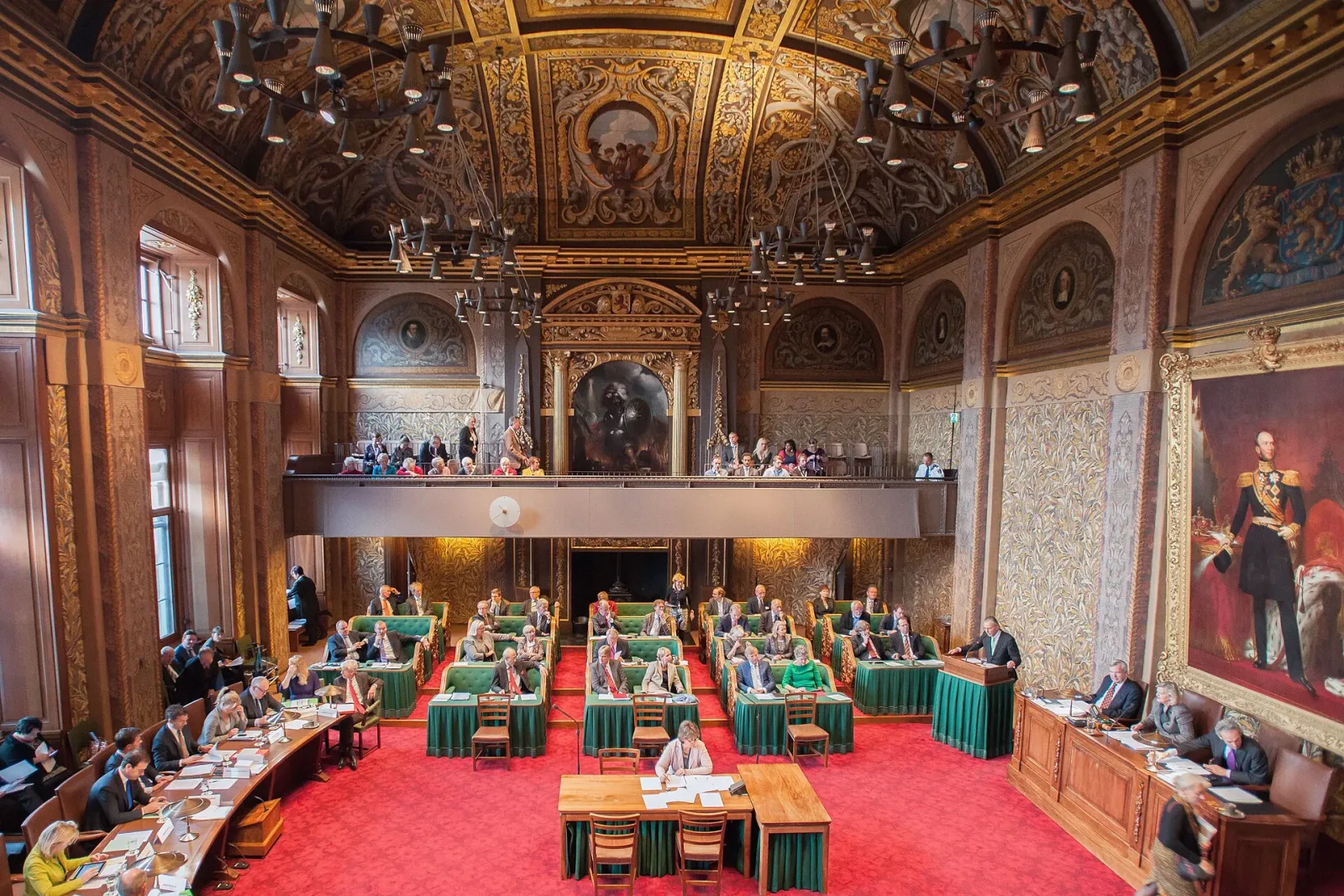
The Dutch States General building or senators meeting in the chamber
The First Chamber of the Dutch States General approved two laws on foreign nationals. Illustrative photo. Photo: Minister-president Rutte from Nederland (+31) / Wikimedia Commons, CC BY 2.0

On 13 October 2026, the First Chamber of the Dutch States General approved two laws on the return and detention of foreign nationals. The measures change rules on detention and restrictions on liberty, allow some foreign nationals to be designated undesirable and abolish court-imposed fines on the Immigration and Naturalisation Service (IND) for missing deadlines to decide asylum applications.

The Return and Detention of Foreign Nationals Act establishes an administrative legal basis for detention and provides alternatives. Detention is to be used only as a last resort to ensure that a foreign national who does not cooperate with return remains available for removal. The law notes that most foreign nationals leave voluntarily.

An amendment gives the director of a detention facility the power to impose a lockdown in response to serious disorder or security threats. During a lockdown, foreign nationals may be kept in their cells for up to 23 hours a day. The amendment also allows people covered by the Return Directive to be designated undesirable and adds measures for those who remain in the Netherlands despite that status.


Advertisement
www.toishy.com

The amendment also abolishes fines against the IND for delayed asylum decisions. Minister for Asylum and Migration Van den Brink said the IND is currently unable to decide cases on time. Over the past year, courts received 230 complaints a day over delayed decisions. The minister said the issue was not only about payments: “the entire system has been paralysed as a result.”

The laws prompted disagreement in the Senate, although most factions supported them. PRO, Volt, SP, PvdD, OPNL and Fractie-Visseren-Hamakers opposed abolishing the fines. Supporters cited costs and pressure on the IND; opponents argued that fines result from delays rather than cause them, and that courts would lose another means of influencing the agency. The debate also covered detention conditions, children’s rights, detention periods and independent oversight.

The Return and Detention of Foreign Nationals Act has been before parliament since 2015. The First Chamber resumed its consideration in 2025 after the Second Chamber passed the bill in June. The announcement did not specify when the laws will take effect.

Translated from Dutch using artificial intelligence. Source: First Chamber of the States General of the Netherlands

Countries:

Read also

Advertisement
Nomascom banner footer