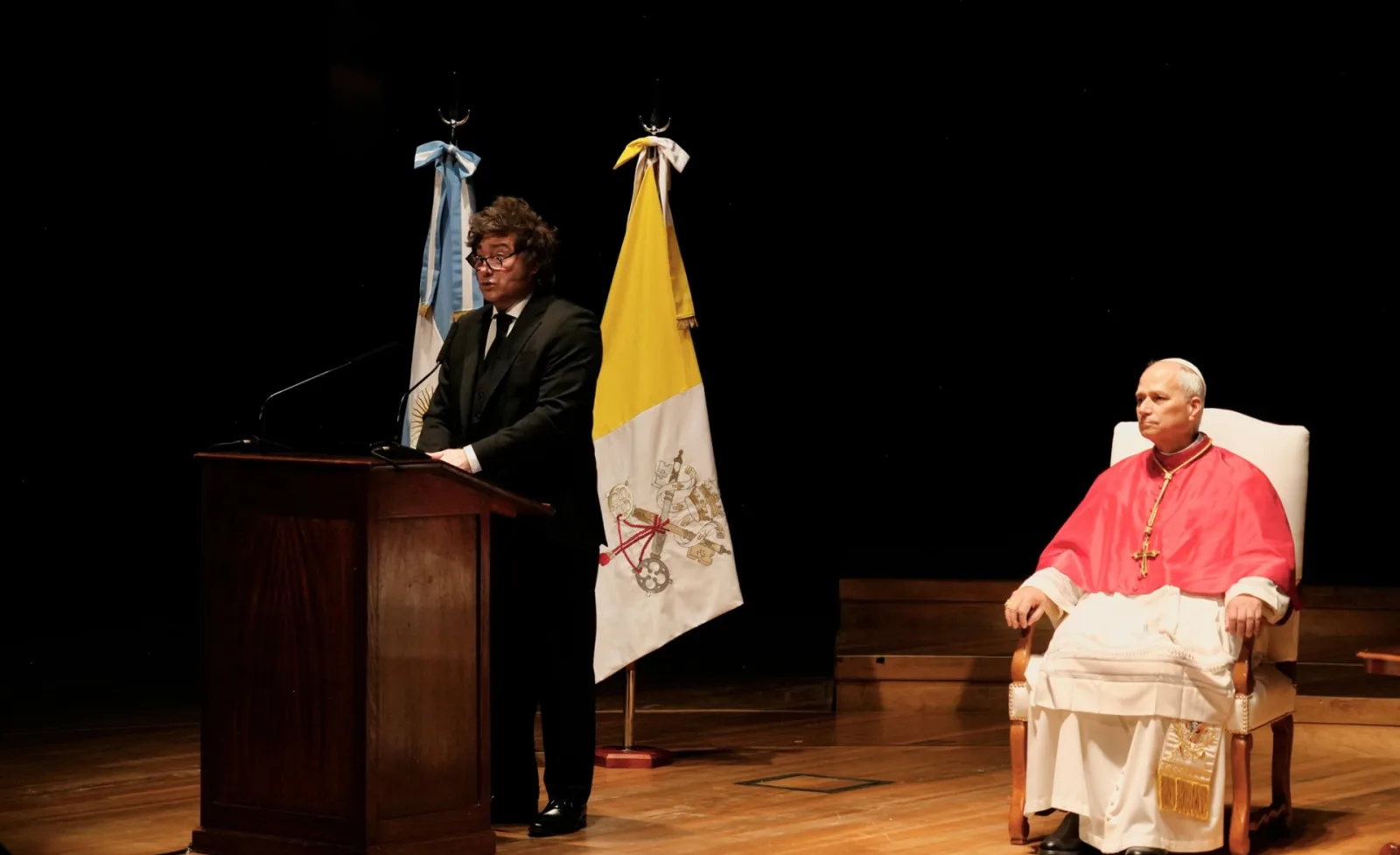
Argentine President Javier Milei and Pope Leo XIV spoke at Palacio Libertad on November 9 during the pontiff’s visit to Argentina. Milei welcomed him on behalf of Argentinians and asked him to pray for the country. Leo XIV said he had come as the successor of the Apostle Peter to meet the local Church and address the whole nation, including those with public responsibilities.
Milei paid tribute to Pope Francis, the Argentine Jorge Bergoglio, calling him an outstanding figure who inspired people regardless of their faith. He recalled Argentina’s Catholic roots and Blessed Mamerto Esquiú’s role in supporting the 1853 Constitution. The president said the rights to life, liberty and property underpin the national Constitution and Western democracies.
Milei said his government would be guided by moral principles and the common good. He described this in economic terms as an “intertemporal general equilibrium”: considering what benefits society as a whole now and in the future, rather than serving the interests of a single sector or generation.
Leo XIV said Argentina had been shaped by generations of people from different backgrounds, including Indigenous peoples and those who arrived from other countries. He called for safeguarding democracy, encouraging dialogue among people with differing views, and exercising authority as service to the common good while respecting the limits of public power.
The pope stressed the importance of decent working conditions, support for private initiative and opportunities for families, the unemployed, older people and those struggling to meet household needs. “The economy must serve the person, not the person the economy,” he said. He also urged stronger education, vocational training, universities and research so young people could build their lives in Argentina.
Leo XIV called for protecting human dignity at every stage of life, caring for people facing illness, addiction or disability, and safeguarding the country’s natural resources. He also highlighted the need for ethical responsibility in the use of technology and artificial intelligence, as well as international cooperation.
The pontiff urged South American countries to work together against organized crime, human trafficking, arms and drug trafficking, and corruption. He said addressing these threats required coordinated state action, reliable institutions, dialogue and respect for the law. The Church, he said, would continue serving people in Argentina and supporting them with the hope of the Gospel.