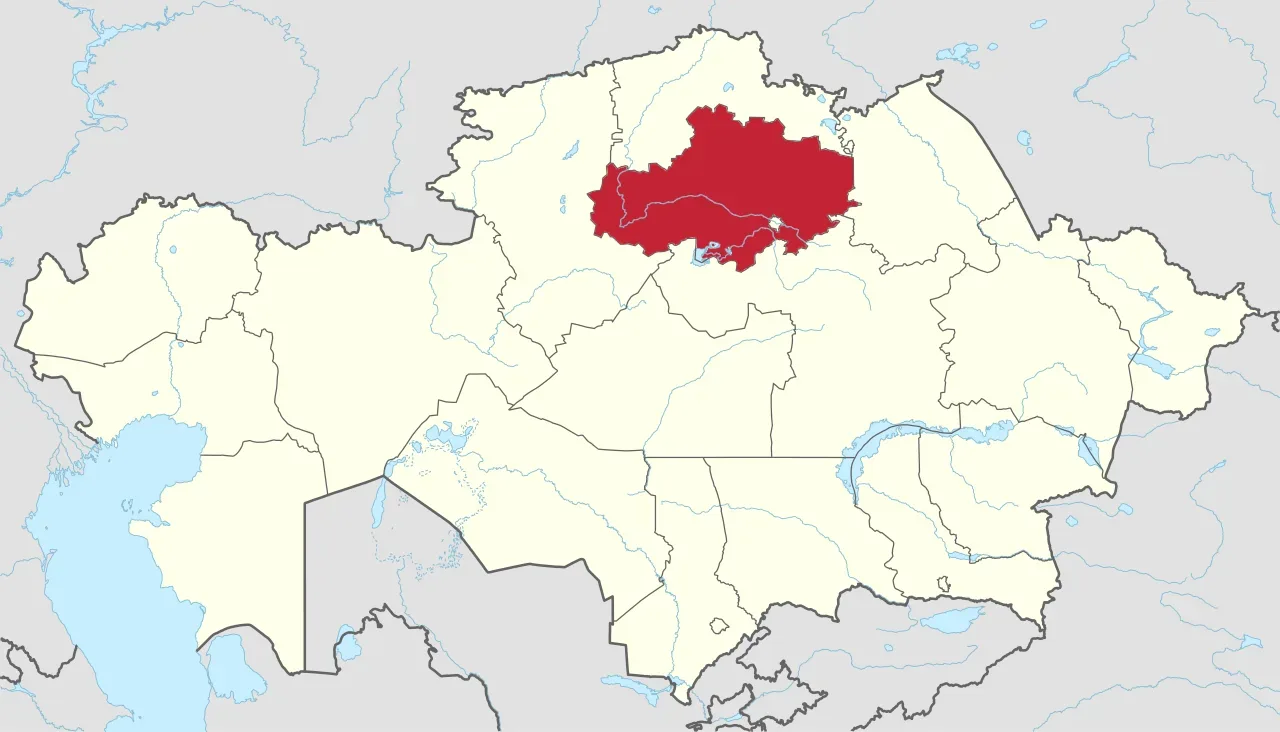
Akmola Region ranked first among Kazakhstan’s regions for total grain output after the 2026 harvest, with farmers threshing 6.3 million tonnes.
The region’s sown area totalled 5.6 million hectares, up 110,800 hectares from the previous year. Grain and leguminous crops were harvested across the entire planned area of 4.5 million hectares. Average yield was 14 centners per hectare.
About 90% of the total harvest was third-class wheat. Around 70% of that volume belonged to the Hi-Pro category, which has a higher protein content. Protein levels reach 17.6%, while gluten content is 30–38%.
Oilseed crops were harvested from 837,900 hectares, yielding 839,100 tonnes at an average of 10 centners per hectare. The region also harvested 168,000 tonnes of potatoes and 21,400 tonnes of vegetables.
More than 14,500 units of agricultural machinery were used for the harvest, including about 7,000 grain combines. The region was allocated 81,200 tonnes of subsidised diesel fuel, with an additional 8,500 tonnes set aside for drying grain and oilseed crops.
To prepare livestock farms for winter, farmers stored 1.35 million tonnes of hay. They also prepared 256,800 tonnes of haylage, 225,700 tonnes of silage and 812,700 tonnes of straw beyond the planned amounts.
The region has 67 grain-receiving facilities with a combined capacity of 4.4 million tonnes, as well as about 1,500 agricultural producers’ warehouses. Total grain storage capacity is 7.3 million tonnes.
Grain-receiving facilities have taken in 2.7 million tonnes of grain, including 1.9 million tonnes of wheat. Of the wheat received, 1.6 million tonnes was third class. About 324.8 billion tenge was allocated for the development of the region’s agro-industrial complex in 2026. A total of 539,800 tonnes of grain seed has been prepared, covering the region’s needs for the 2027 sowing campaign.