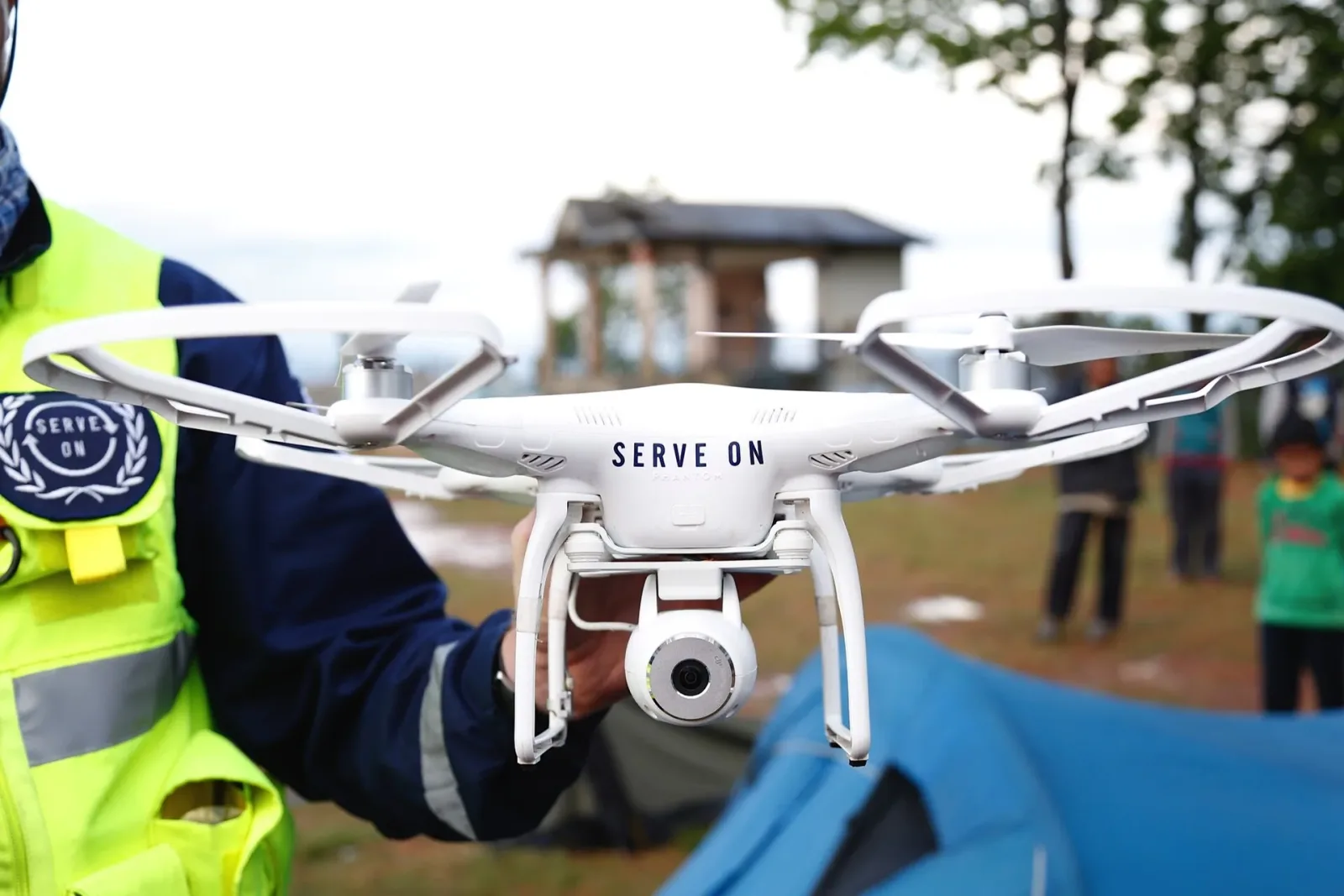
Rescuers found a woman who had gone missing in a cornfield in North Kazakhstan Region within an hour, using a drone equipped with a thermal imager. In Almaty Region, a drone helped locate ten people lost in a mountain gorge.
In 2025–2026, drones were used to find and rescue 73 people. The Ministry of Emergency Situations has 242 unmanned aerial vehicles, 187 of them equipped with artificial intelligence functions. They can detect people and vehicles, survey hard-to-reach areas, monitor locations at night and send coordinates to search teams.
Drones were deployed in 4,647 operations in 2026. Three autonomous systems with docking stations are operating in Almaty and Karaganda regions, flying preset routes and sending information to operational control centres.
Digital tools also help identify emergencies before a distress call comes in. Early-detection cameras for forest fires send information to the ministry’s Situation Centre, while monitoring systems track natural hazards and help forecast flood conditions.
At bodies of water, drones fitted with loudspeakers warn visitors of danger. The Tumar 112 app, designed to digitally record fire-safety violations in residential areas, is being tested in Abai Region. Solutions are also being developed to transmit the coordinates of people in mountains where there is no mobile coverage.
Specialists ensure the reliable operation of drones, communications, warning systems and monitoring tools. On 10 November, Digitalisation and Information Technology Workers’ Day, Kazakhstan’s Ministry of Emergency Situations congratulated professionals in the sector.