Drought accompanying El Niño has left the Amazon rainforest vulnerable to fire. Scientists say the region is in the early stages of what they expect could be a long and severe fire season.
Since September 2026, satellites have recorded sharp increases in fire activity and smoke emissions in the central and eastern Amazon. The affected area stretches from forests around Manaus and Santarém to the mouth of the Amazon River.
On October 12, the MODIS instrument aboard NASA’s Aqua satellite captured smoke from fires on both sides of the Amazon River. Heavy smoke covered Manaus, the capital of Brazil’s Amazonas state. City officials reported very poor air quality, with PM2.5 levels above 135 micrograms per cubic meter. Schools closed, and city events and children’s sports leagues were canceled.
Douglas Morton, an Earth system scientist at NASA’s Goddard Space Flight Center, links the spread of fires across the tropics to El Niño-related changes in rainfall. He said the sequence begins with drought and peat fires in Indonesia, followed by increased fire activity in the Amazon. Researchers observed the same pattern during the 2015–2016 El Niño and again in 2023.
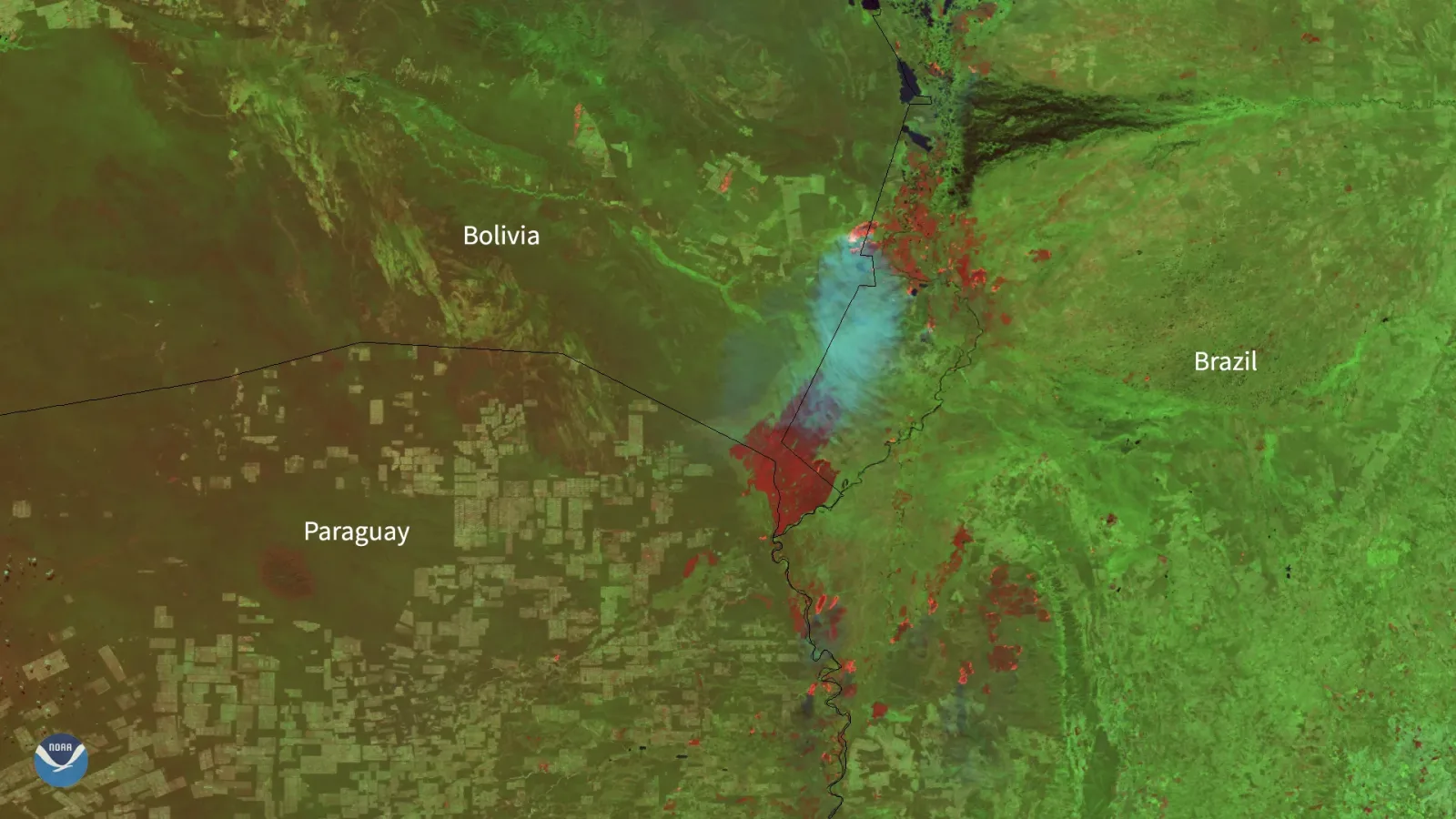
Morton and his colleagues expect another wave of fires in November and December in Brazil’s Roraima, northern Pará, and Amapá states, as well as parts of Venezuela, Guyana, and Suriname. He said drought and fire risk could peak in August and September 2027 in the southern Amazon regions of Brazil and Paraguay.
More than 99 percent of fires in the Amazon are started by people, Morton said. Drought worsened by El Niño has been intense this year. Brazil’s National Institute of Meteorology reported that rainfall in Manaus was 95 percent below normal in August and 60 percent below normal in September.
Between 50 and 70 uncontrolled fires are burning in the Santarém region alone, said Shane Coffield, a University of Maryland research scientist. His analysis of VIIRS satellite observations suggests there may be about 40 percent more fires around Santarém than the active-fire counts reported by NASA’s FIRMS. Dense smoke, clouds, and tree cover can prevent satellites from detecting some fires.
Morton expects fires around Santarém and Manaus to continue until the rainy season begins in December 2026 or January 2027. He said there is still time to prepare for fires farther north and south, and urged people to avoid burning wherever possible this year.