Kazakhstan’s Vice Minister of Agriculture Amangaliy Berdalin held talks with officials from the agriculture departments of Idaho and Montana, as well as representatives of US agribusiness. Discussions focused on supplies of high-performance breeding livestock and the introduction of US genetics.
The meetings took place during the vice minister’s working visit to the United States. Berdalin said Kazakhstan ranks fifth in the world by pastureland area, at around 180 million hectares, and has significant potential to increase beef, lamb and dairy production.
This year, the Comprehensive Plan for Livestock Development for 2026–2030 was approved and launched on the instruction of the Head of State. It provides for improving genetics, strengthening the fodder base, expanding financing, introducing technology and developing processing.
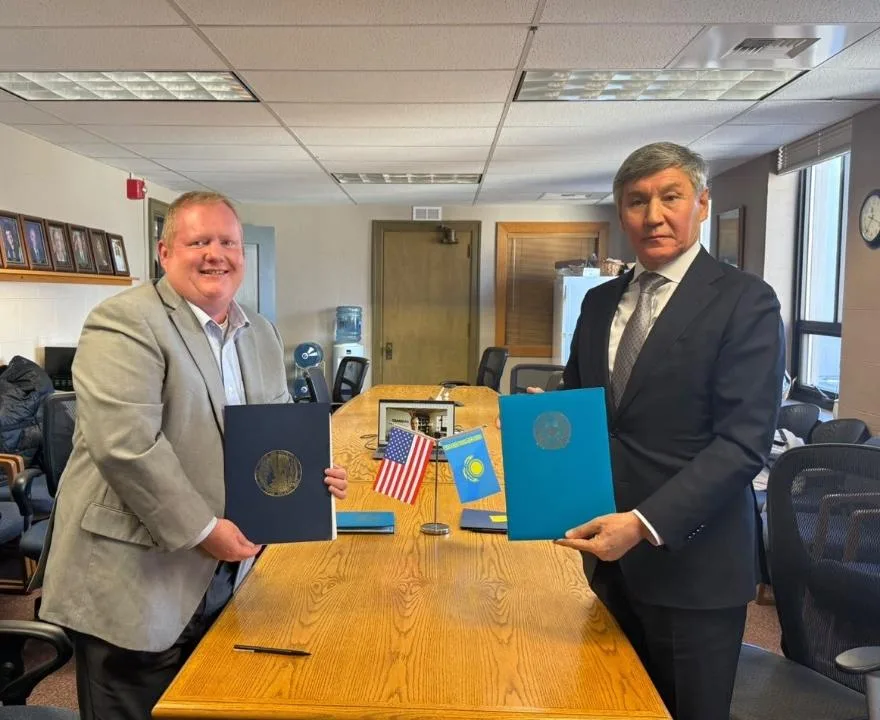
A key outcome of the visit was the signing of a cooperation memorandum between Kazakhstan’s Ministry of Agriculture and US company Trans Ova Genetics, LC. The agreement provides for a specialised embryology laboratory in Kazakhstan to collect, assess, cryopreserve and transfer cattle embryos, as well as training Kazakh specialists with the involvement of foreign experts.
Kazakhstan is currently implementing six full-cycle red meat production projects, while the country’s first specialised livestock exchange is under construction in the south. The parties agreed to train Kazakh specialists to conduct livestock auctions in line with US standards for transparent pricing.
Dairy farming was also identified as a promising area for cooperation. More than 100 modern dairy farms have been built in Kazakhstan in recent years, at an average cost of around $9 million each. Concessional loans are planned for the construction of 50 more high-efficiency dairy farms using digital technologies.
US companies have been invited to help equip the complexes and localise equipment assembly in Kazakhstan, with a view to entering Central Asian markets. The parties agreed to turn the understandings into specific investment and trade projects, drawing on Montana’s expertise in beef cattle farming and Idaho’s in industrial dairy production and processing. The ministry will establish a permanent working platform involving government agencies, businesses and research organisations to support joint initiatives.