




Skip to content
Advertisement
www.nomascom.kz upper
Tribuna.kz

Science & Tech

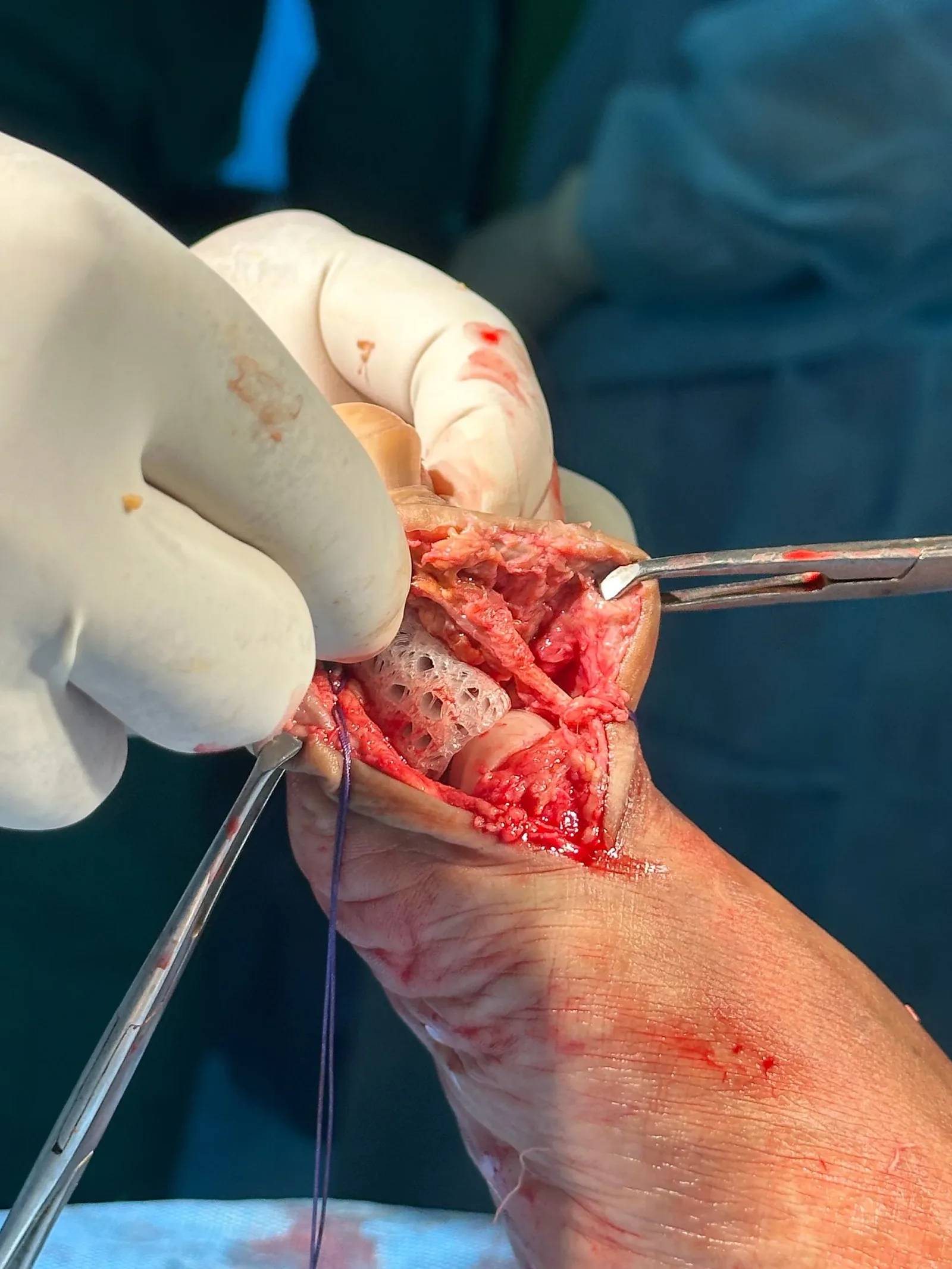
Russian and Chinese scientists develop implant to stimulate tissue growth

The 3D-printed device is activated by a magnetic field and gradually dissolves in the body.

Researchers from Russia and China have developed a bioresorbable implant designed to stimulate the growth of bone and nerve tissue and blood vessels. In experiments, bone formation increased 4.6-fold and the number of nerve fibers at the injury site rose 3.1-fold.

Author: Робот Source: Ministry of Science and Higher Education of Russia

A 3D-printed implant sample and magnetoelectric nanomaterials displayed in a laboratory
A bioresorbable implant activated by a magnetic field to stimulate tissue growth. Illustrative photo. Photo: Donvikro / Wikimedia Commons, CC BY-SA 4.0

Researchers from Russia and China have presented a 3D-printed bioresorbable implant designed to stimulate the growth of bone and nerve tissue and blood vessels. A standard magnetic field is enough to activate it.

Magnetoelectric nanoparticles embedded in the implant generate an electrical signal when exposed to a magnetic field. The signal stimulates tissue growth, while the implant gradually dissolves in the body. No electrodes or wired power source are needed.

The implant was developed by scientists from the National University of Science and Technology MISIS and Tomsk Polytechnic University, together with colleagues from the Shanghai Institute of Ceramics of the Chinese Academy of Sciences.

Advertisement
www.toishy.com

In separate work, MISIS researchers and colleagues from Skoltech, ITMO University, Lomonosov Moscow State University and Dagestan State University demonstrated new experimental ways to measure local electrical responses in magnetoelectric nanocomposites. They also proposed a concept for an ultrafast, thermally induced magnetoelectric effect that could be used for neurostimulation.

The researchers said the technology increased the rate of bone tissue formation 4.6-fold and the number of nerve fibers at the injury site 3.1-fold.

The research was supported by grants from the Russian Science Foundation.

Translated from Russian using artificial intelligence. Source: Ministry of Science and Higher Education of Russia

Countries:

Read also

Advertisement
Nomascom banner footer