





Skip to content
Advertisement
www.nomascom.kz upper
Tribuna.kz

World

Antarctic sea ice reaches its third-lowest maximum in 2026

NASA estimates the annual maximum occurred on September 14, when sea ice covered 17.59 million square kilometers.

Antarctic sea ice likely reached its annual maximum on September 14, 2026. It was the third-lowest maximum recorded since satellite observations began.

Source: Национальное управление по аэронавтике и исследованию космического пространства

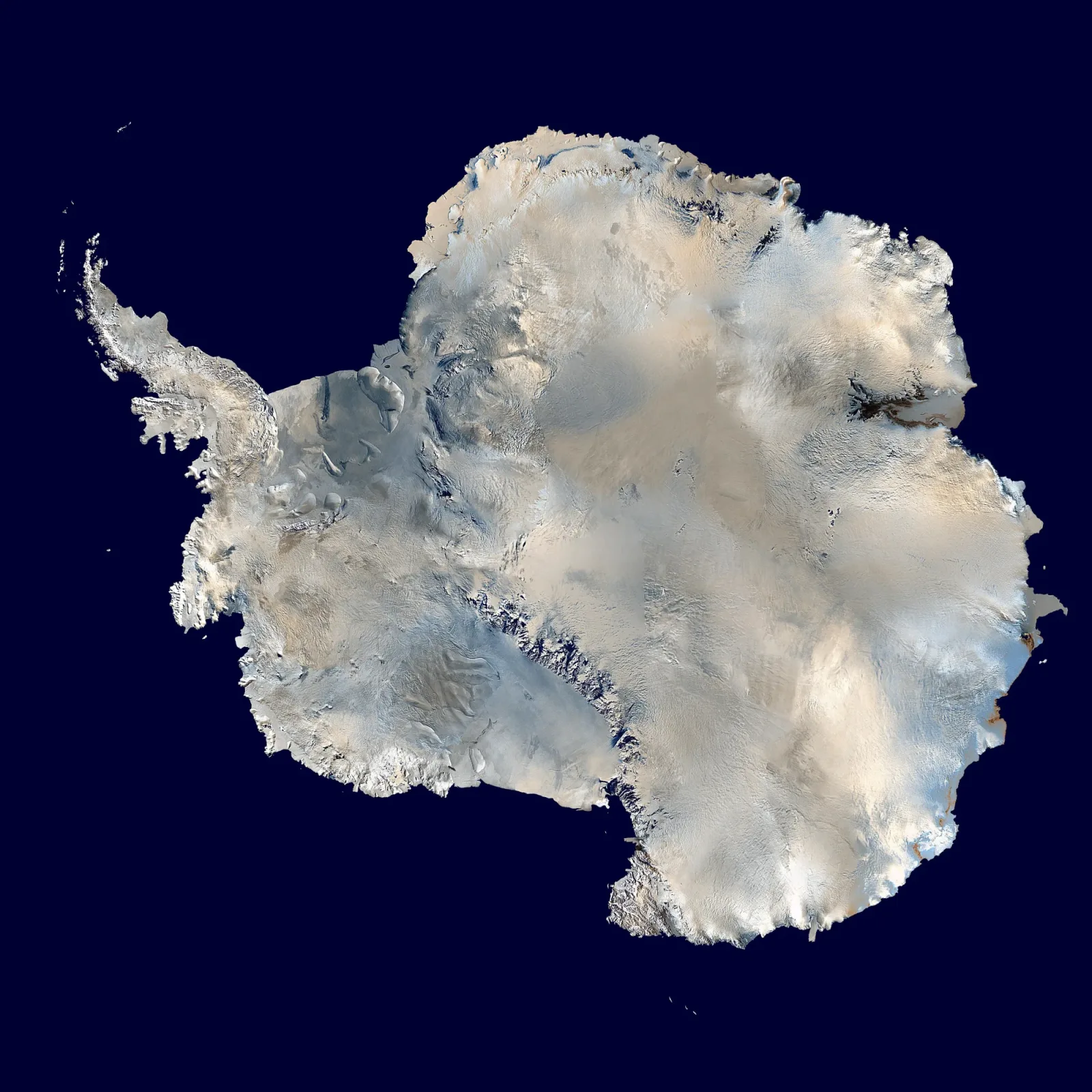
Satellite map of Antarctica surrounded by sea ice
Satellite data showing the 2026 extent of sea ice around Antarctica. Illustrative photo. Photo: Dave Pape / Wikimedia Commons, Public domain

Antarctic sea ice likely reached its largest extent of 2026 on September 14, according to NASA and the U.S. National Snow and Ice Data Center. It covered an estimated 17.59 million square kilometers, the third-lowest annual maximum in the satellite record.

Sea ice around Antarctica typically reaches its greatest extent in September, near the end of winter in the Southern Hemisphere, then retreats to a minimum in February.

From 1979 to 2014, total Antarctic sea ice increased by about 1 percent per decade. But because its extent varies considerably from year to year, scientists say it is uncertain whether that increase represented a meaningful change. Satellites recorded three consecutive winter highs from 2012 to 2014.


Advertisement
www.toishy.com

The rise ended in 2015, and significant decreases began in 2016. There have been small rebounds in some years, but Antarctic sea ice has mostly remained below normal. Both the record-low minimum and maximum occurred in 2023.

Scientists measure sea ice extent using satellites equipped with passive microwave sensors. Microwaves pass through clouds, allowing observations regardless of weather.

The record began in late 1978 with data from NASA’s Nimbus-7 satellite. Defense Meteorological Satellite Program spacecraft followed in 1987, and NASA’s Aqua satellite provided observations from 2002 to 2011. In 2025, scientists began using data from Japan’s GCOM-W satellite.

Source: Национальное управление по аэронавтике и исследованию космического пространства

Read also

Advertisement
Nomascom banner footer