




Skip to content
Advertisement
www.nomascom.kz upper
Tribuna.kz

Science & Tech

Chinese scientists develop real-time method to detect superconducting magnet quenches

The system remained stable during tests involving strong electromagnetic interference.

Researchers at the Chinese Academy of Sciences have developed a deep-learning method to detect superconducting magnet quenches online. It distinguishes quench signals from magnetic flux jumps.

Author: Робот Source: Chinese Academy of Sciences

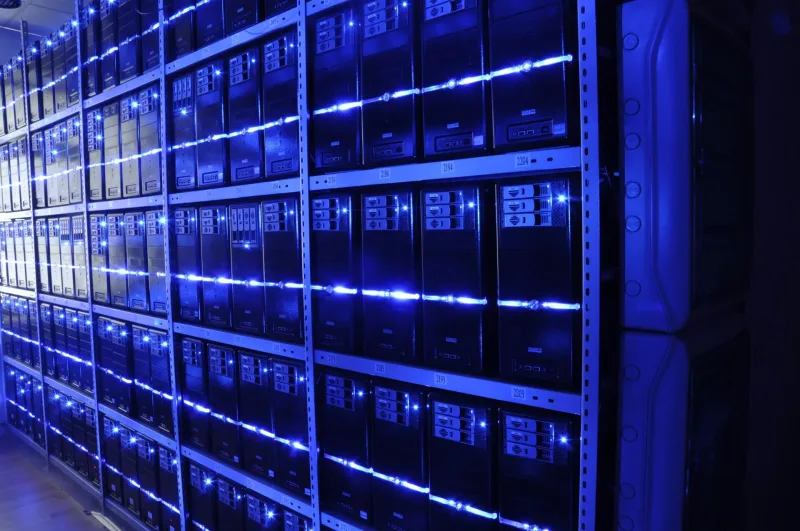
A superconducting magnet and monitoring equipment in a research laboratory
The AI-QDS system monitors a superconducting magnet in real time. Illustrative photo. Photo: Universaldenker / Wikimedia Commons, CC BY 4.0

A quench occurs when part of a superconducting magnet suddenly shifts from the superconducting state to the normal state. If it is not detected promptly and protective measures are not taken, the magnet can overheat and be damaged.

A team at the Institute of Modern Physics of the Chinese Academy of Sciences proposed an online detection method based on deep learning. It addresses false triggers and increased detection delays that can affect conventional methods amid strong magnetic flux jumps.

The researchers trained a convolutional neural network (CNN) using detection data accumulated over several years. The model identifies subtle differences between magnetic flux jumps and quench signals. They then developed and deployed an artificial intelligence quench detection system, AI-QDS, for real-time online monitoring.


Advertisement
www.toishy.com

The system underwent functional testing during an excitation test of the HFECR superconducting magnet, part of a fourth-generation electron cyclotron resonance (ECR) ion source with high charge states. It ran reliably despite strong electromagnetic interference, including more than a thousand magnetic flux jumps recorded during the test.

The findings provide an initial demonstration of the feasibility and effectiveness of deep-learning-based online quench detection for low-temperature superconducting magnets. The research was published in Superconductor Science and Technology and received support from the National Natural Science Foundation of China, among other sources.

Translated from Chinese using artificial intelligence. Source: Chinese Academy of Sciences

Countries:

Read also

Advertisement
Nomascom banner footer